Home > Best Time to Visit Wan Chai
Best Time to Visit Wan Chai — Month-by-Month Weather & Seasons
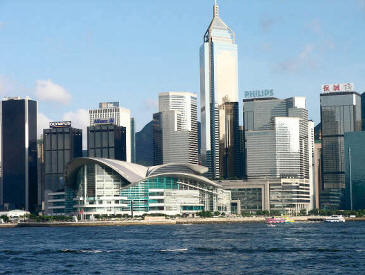
Wan Chai sits on Hong Kong Island in a sub-tropical climate that is “tending temperate for nearly half the year”, in the words of the Hong Kong Observatory (HKO). The short answer to “when should I go” is therefore seasonal rather than absolute: November and December for the most comfortable weather, spring for a good balance of weather and thinner crowds, and a visit planned around the district's May to September rain and tropical-cyclone window. HKO's own summary of the year's best weather is unusually direct: “During November and December there are pleasant breezes, plenty of sunshine and comfortable temperatures. Many people regard these as the best months of the year.”
This page is the weather side of trip planning. If you want the time-of-day question — when the markets open, when the heritage trail is quietest — that is answered separately in When to Go to Wan Chai.
Seasons at a glance — the 12-month climate table
The table below is built entirely from the Hong Kong Observatory's 1991–2020 monthly normals for Hong Kong. Temperatures are degrees Celsius; rainfall and rain-day figures are long-term monthly means. Use it to pick a month in ten seconds, then read the season sections below for what each one means on the ground in Wan Chai.
| Month | Avg high (°C) | Daily mean (°C) | Avg low (°C) | Rain (mm) | Rain days | Verdict |
|---|---|---|---|---|---|---|
| January | 18.7 | 16.5 | 14.6 | 33.2 | 5.7 | Cool & dry |
| February | 19.4 | 17.1 | 15.3 | 38.9 | 8.0 | Cool & dry |
| March | 21.9 | 19.5 | 17.6 | 75.3 | 10.5 | Mild, humid |
| April | 25.6 | 23.0 | 21.1 | 153.0 | 11.4 | Mild, wetter |
| May | 28.8 | 26.3 | 24.5 | 290.6 | 15.4 | Hot & wet |
| June | 30.7 | 28.3 | 26.5 | 491.5 | 19.3 | Hot, wettest |
| July | 31.6 | 28.9 | 26.9 | 385.8 | 18.4 | Hot & wet, cyclone peak |
| August | 31.3 | 28.7 | 26.7 | 453.2 | 17.5 | Hot, wettest, cyclone peak |
| September | 30.5 | 27.9 | 26.1 | 321.4 | 14.9 | Hot & wet, cyclone peak |
| October | 28.1 | 25.7 | 23.9 | 120.3 | 7.8 | Warm, drying |
| November | 24.5 | 22.2 | 20.3 | 39.3 | 5.7 | Comfortable, dry |
| December | 20.4 | 18.2 | 16.2 | 28.8 | 5.3 | Comfortable, driest |
Source: Hong Kong Observatory, monthly meteorological normals for Hong Kong, 1991–2020. The 1991–2020 annual means for Hong Kong are 23.5 °C and 2,431.2 mm of rainfall.
Autumn (October–December): the comfortable window
Autumn is the reason HKO can name November and December as the best months. October is still warm — a daily mean of 25.7 °C — but the rain has largely gone: 120.3 mm over about 7.8 rain days, down from the summer peak. October is also the brightest month of the year, with 197.8 hours of bright sunshine, and the light on the Victoria Harbour waterfront from the Wan Chai side is at its most reliable.
November (22.2 °C daily mean) and December (18.2 °C) fall in the driest stretch of the year: December's 28.8 mm is the lowest monthly rainfall normal of the year, January's 33.2 mm the second lowest, and November's 39.3 mm only a fraction of the summer peaks. The temperature sits in the range where a long walk doesn't leave you soaked in sweat. This is the window that suits the district's outdoor sights best:
- The Wan Chai Heritage Trail — roughly 3 km past 15 historic buildings, best walked in the dry, cool months. The Wan Chai Heritage Trail guide covers the route and the two overlapping trails.
- The Blue House, a Grade I historic building, is a 6-minute walk from Wan Chai Station Exit A3 (MTR).
- Tai Yuen Street (“Toy Street”) and its market are a 3-minute walk from Wan Chai Station Exit A3.
- M7 (7 Mallory Street), the restored shophouse arts space, is 6 minutes from Exit A3.
- HarbourChill, the harbourfront lawn and seating area next to Wan Chai Ferry Pier, is at its most usable in this spell — it opened in May 2021, covers about 0.3 hectares, and has an artificial lawn, shelters and seating.
📷 Why October–December is the photo window
October's bright-sunshine total (197.8 hours) is the highest of the year, and November–December bring the year's clearest, driest air. If your Wan Chai visit is built around the harbour, Golden Bauhinia Square or the Convention Centre waterfront, judge the light by this window rather than by temperature alone. See also the Hong Kong Convention and Exhibition Centre for the harbour-side landmark.
Winter (January–February): cool, dry, occasionally cold
Winter in Wan Chai is mild by northern-hemisphere standards, but it is not uniformly warm. HKO describes this period as cloudier, with occasional cold fronts, and temperatures can drop below 10 °C in urban areas when a front pushes through. The normals tell the same story: January averages a daily mean of 16.5 °C with a low of 14.6 °C, and February 17.1 °C — but a cold snap is a real possibility rather than a theoretical one, so pack a layer.
Rainfall is low — 33.2 mm in January and 38.9 mm in February — and both months are among the driest of the year. The trade-off is sunshine: February averages only about 101.7 hours of bright sunshine, so expect more grey days than in autumn. The upside is that the winter months are outside the tropical-cyclone season entirely: zero days with a tropical-cyclone warning signal in January, February, March and December by long-term normal.
Winter pairs well with the district's indoor side — the shopping malls, the cooked-food stalls and the Tai Yuen Street market — and with a covered walk along the harbour when the sun does appear.
Spring (March–April): mild, rising humidity
Spring is the transitional season, and HKO describes it simply as milder, with occasional spells of high humidity. March averages 19.5 °C and 75.3 mm of rain; April jumps to a 23.0 °C daily mean with 153.0 mm — the month the wet season starts in earnest. Rain days climb from 10.5 (March) to 11.4 (April).
The humidity is the honest caveat: this is the season for hazy, damp mornings and low cloud on the peaks, which affects long views from the waterfront and up toward the Peak. In exchange, spring is generally gentler than summer on both heat and crowds, and it is a reasonable compromise for a heritage-trail walk or a market browse. Both March and April have no tropical-cyclone warning-signal days to speak of (April averages just 0.20), so a spring trip is unlikely to be interrupted by a storm.
Summer (May–August): hot, humid and wet
Summer is the season to plan around rather than to avoid entirely. HKO's summary is hot and humid, with occasional showers and thunderstorms; afternoon temperatures often exceed 31 °C, and nights generally sit around 26 °C. The normals bear that out: July is the hottest month with a daily mean of 28.9 °C and an average high of 31.6 °C.
Rain is the bigger constraint. Roughly 80% of Hong Kong's rain falls between May and September, and June and August are usually the wettest months: June averages 491.5 mm over 19.3 rain days, August 453.2 mm over 17.5. Thunderstorms are frequent too — the long-term mean is 8.1 thunderstorm days in June, 8.0 in July and 8.9 in August. On a summer visit, expect a downpour to interrupt an afternoon rather than to define the whole day.
🌞 How to do summer in Wan Chai
- Front-load the outdoor sights. Walk the heritage trail or browse the markets in the morning, before the afternoon heat and the thunderstorms build.
- Keep an indoor plan for the middle of the day — the Hong Kong Convention and Exhibition Centre, the district's computer arcades and shopping malls, and the covered walkways are all air-conditioned shelter.
- Carry water and an umbrella. A compact umbrella covers both the sun and the sudden showers.
- Treat HarbourChill as an evening stop rather than a midday one; the harbourfront lawn is far more pleasant after the heat of the day.
Tropical-cyclone season: what visitors should actually do
Hong Kong's tropical-cyclone season runs May to November, with July to September the most likely months for cyclones affecting Hong Kong, according to HKO. In a typical year about 30 tropical cyclones form in the western North Pacific and the China Seas, and about half reach typhoon strength (maximum sustained winds of 118 km/h or more) — though only a small fraction come close enough to Hong Kong to disrupt a visit.
The table below shows, from the 1991–2020 normals, how often each month produces a tropical-cyclone warning signal (No. 1 or above) in Hong Kong, alongside the average number of thunderstorm days.
| Month | Mean days with tropical-cyclone warning signal | Mean thunderstorm days |
|---|---|---|
| January–March & December | 0 | 0–1.4 |
| April | 0.20 | 3.13 |
| May | 0.27 | 5.87 |
| June | 2.00 | 8.13 |
| July | 3.13 | 7.97 |
| August | 4.17 | 8.90 |
| September | 3.83 | 5.07 |
| October | 1.70 | 0.83 |
| November | 0.57 | 0.17 |
Source: Hong Kong Observatory 1991–2020 normals. The annual mean is 15.87 days with a tropical-cyclone warning signal in Hong Kong.
⚠️ What to do if a cyclone is forecast
- Check the Hong Kong Observatory, not a holiday app. HKO issues the warning signals and is the only authoritative source. This page gives long-term climate normals — it is not a forecast and never predicts a specific storm.
- Expect transport to be affected. Ferries and MTR services can be suspended or reduced as signals are raised — the Wan Chai–Tsim Sha Tsui Star Ferry is a harbour crossing, so check the operator on the day. See Getting to Wan Chai for the full transport picture.
- Build a cushion into your itinerary. If you travel in July–September, keep an indoor day in reserve and don't schedule a fixed departure for the same day as a major outdoor plan.
- Know the words. HKO uses “tropical cyclone” and “tropical cyclone warning signal.” Its normals also record how often the higher signals are raised: days at Number 8 or above average 0.80 in August, 0.67 in September and 0.53 in July — rarer than the Number 1 and Number 3 signals they escalate from.
Best months by activity
Pulling the two tables together, here is how the Wan Chai trip you actually want maps onto the year. Every “best month” below is a reading of the HKO figures, not an official ranking.
| What you want to do | Best months | Why, from the data |
|---|---|---|
| Walk the heritage trail (about 3 km, outdoors) | Nov–Dec, then Mar–Apr | Driest, coolest months: December's 28.8 mm is the year's lowest rainfall normal, and Nov–Apr all stay under 155 mm. |
| Browse Tai Yuen Street and the market | Nov–Mar | Low rain days (5–10 per month) and cooler temperatures suit a partly open-air browse; avoid the 19-plus rain days of June. |
| Harbour views and photography | Oct–Dec | October has the year's most bright sunshine (197.8 h); December is the driest month, and Nov–Feb all sit under 40 mm. |
| Indoor days (mall, arcades, HKCEC) | Jun–Aug, or any wet day | June (491.5 mm) and August (453.2 mm) are the wettest months — the ones most likely to push you inside. |
| Lowest storm risk | Dec–Mar | Zero mean days with a tropical-cyclone warning signal; the Aug–Sep peak averages 3.8–4.2 days per month. |
See also the 2026 events calendar and the 2027 events calendar for what is on in the district month by month.
Practical planning: getting to the sights in any season
Whatever month you choose, the district is compact and the weather rarely stops you reaching it. The MTR's own walking directions put the main heritage sights within minutes of one exit:
- Wan Chai Station Exit A3 — Blue House (6 min), Tai Yuen Street market (3 min), M7 at 7 Mallory Street (6 min).
- Exhibition Centre Station Exit A2 — about 5 minutes to HarbourChill, the harbourfront space beside Wan Chai Ferry Pier; from the ferry pier itself it is about 3 minutes.
For the full picture of arriving in the district — MTR lines, buses, trams and the ferry — see Getting to Wan Chai. For when each place is open and at its best during the day, see When to Go to Wan Chai.
Frequently asked questions
What is the best month to visit Wan Chai?
By HKO's own wording, November and December: “pleasant breezes, plenty of sunshine and comfortable temperatures.” December is also the driest month of the year by rainfall normal (28.8 mm), with January second (33.2 mm), and the two months average daily means of 22.2 °C and 18.2 °C. October runs them close for sunshine, and March–April is the best-value alternative if you want milder weather than summer.
Does it rain a lot in summer in Wan Chai?
Yes. Roughly 80% of Hong Kong's rain falls between May and September, and June and August are usually the wettest months — June averages 491.5 mm over about 19.3 rain days, August 453.2 mm over 17.5. Showers and thunderstorms are frequent, so plan indoor stops for the afternoons.
When is typhoon season in Hong Kong?
The tropical-cyclone season runs May to November, with July to September the most likely months for cyclones affecting Hong Kong. The 1991–2020 normals show the highest frequency of warning-signal days in August (4.17), September (3.83) and July (3.13); January to March and December average none.
Is winter cold in Wan Chai?
Generally mild, but not always warm. January averages a daily mean of 16.5 °C and February 17.1 °C, yet HKO notes that cold fronts can push urban temperatures below 10 °C. Pack a jacket, and expect cloudier, less sunny days than in autumn — February averages only about 101.7 hours of bright sunshine.
Sources
- Hong Kong Observatory — Climate of Hong Kong: seasonal descriptions, tropical-cyclone season and frequency, rainfall share, wettest and driest months. hko.gov.hk/en/cis/climahk.htm
- Hong Kong Observatory — Monthly Meteorological Normals for Hong Kong (1991–2020): temperature, rainfall, rain days, warning-signal days, thunderstorm days and sunshine. hko.gov.hk/en/cis/normal/1991_2020/normals.htm
- MTR — Discoveries along Wan Chai, Exhibition Centre and Causeway Bay Stations: walking times from station exits. mtr.com.hk
- Harbourfront Commission — HarbourChill, Wan Chai: harbourfront space next to Wan Chai Ferry Pier. hfc.org.hk
All climate figures on this page are Hong Kong Observatory 1991–2020 normals, the standard long-term averages; they describe typical conditions, not a forecast for a particular date. Always check the Hong Kong Observatory for current weather and warnings before travelling.